
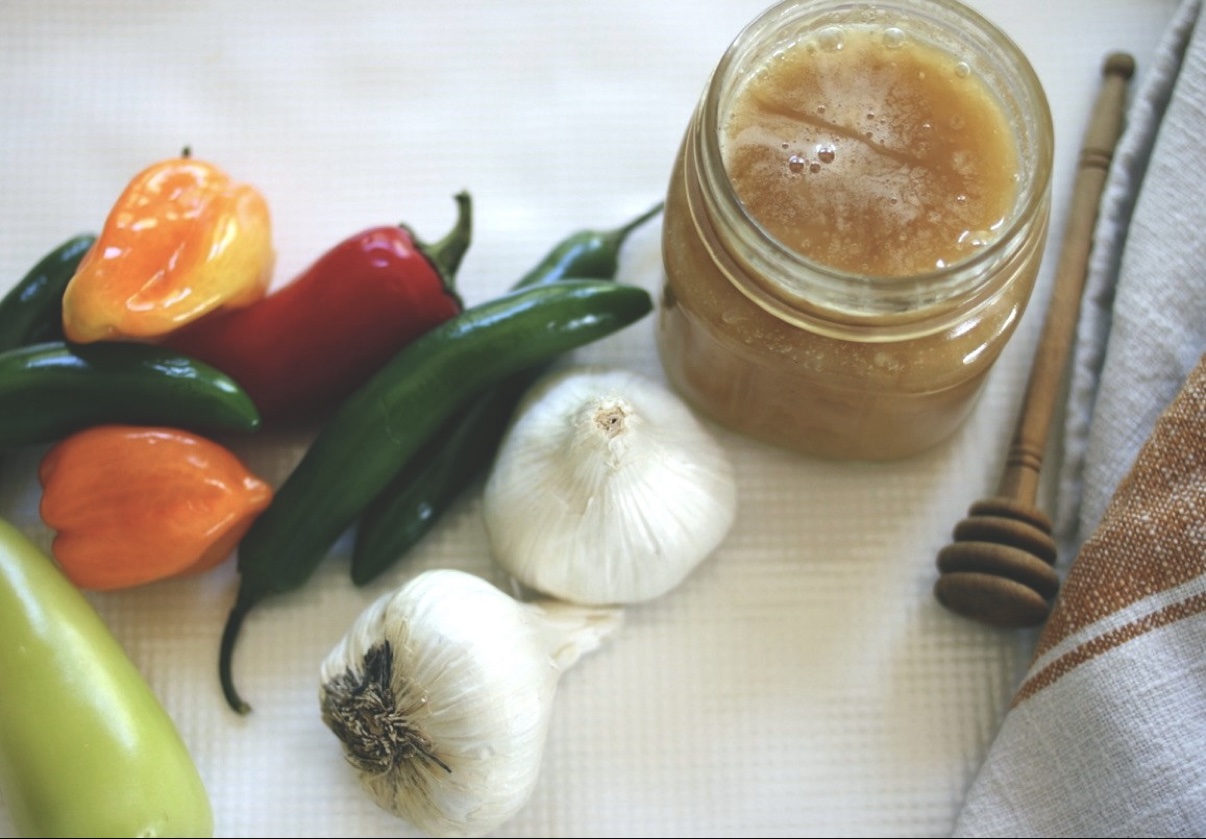
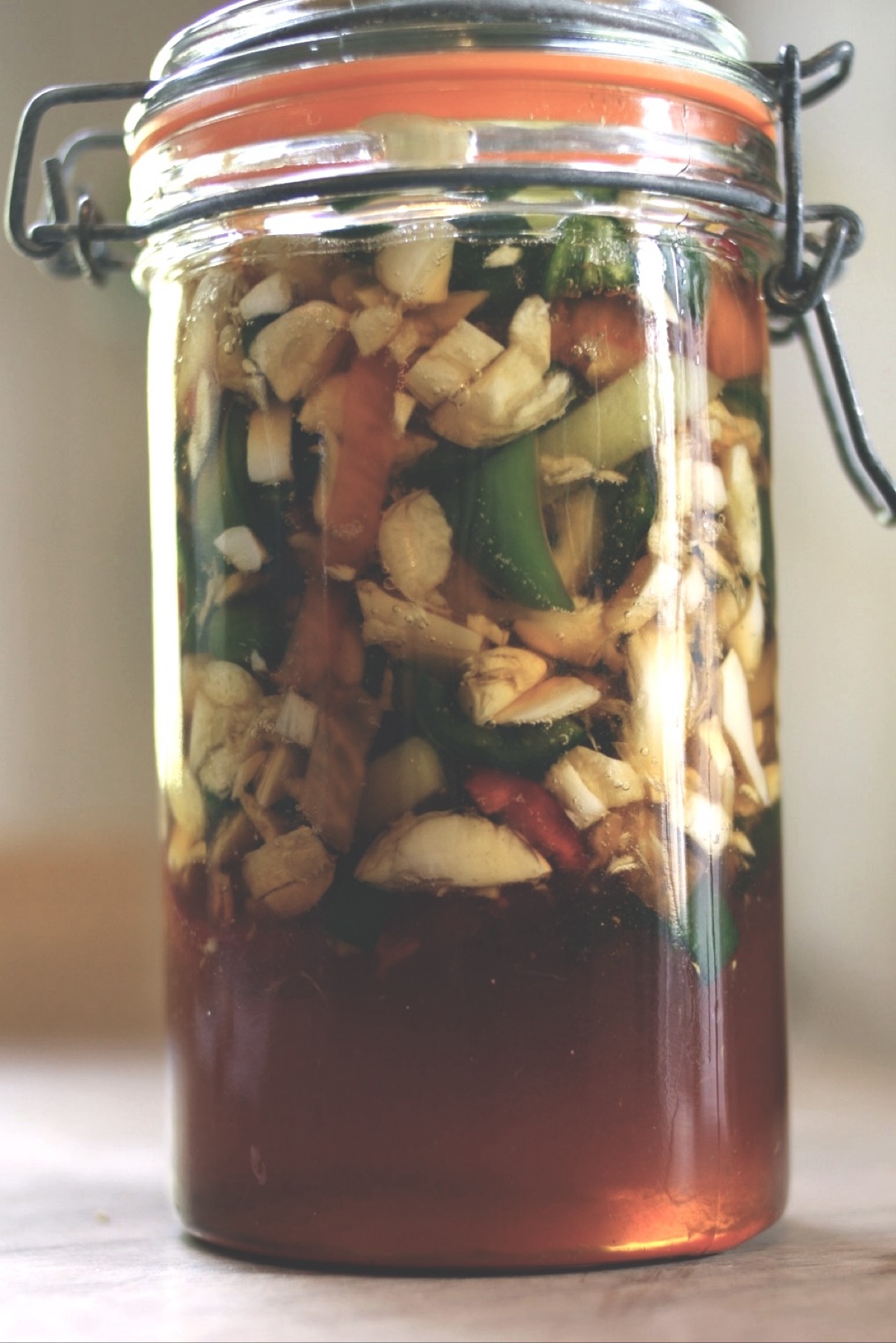
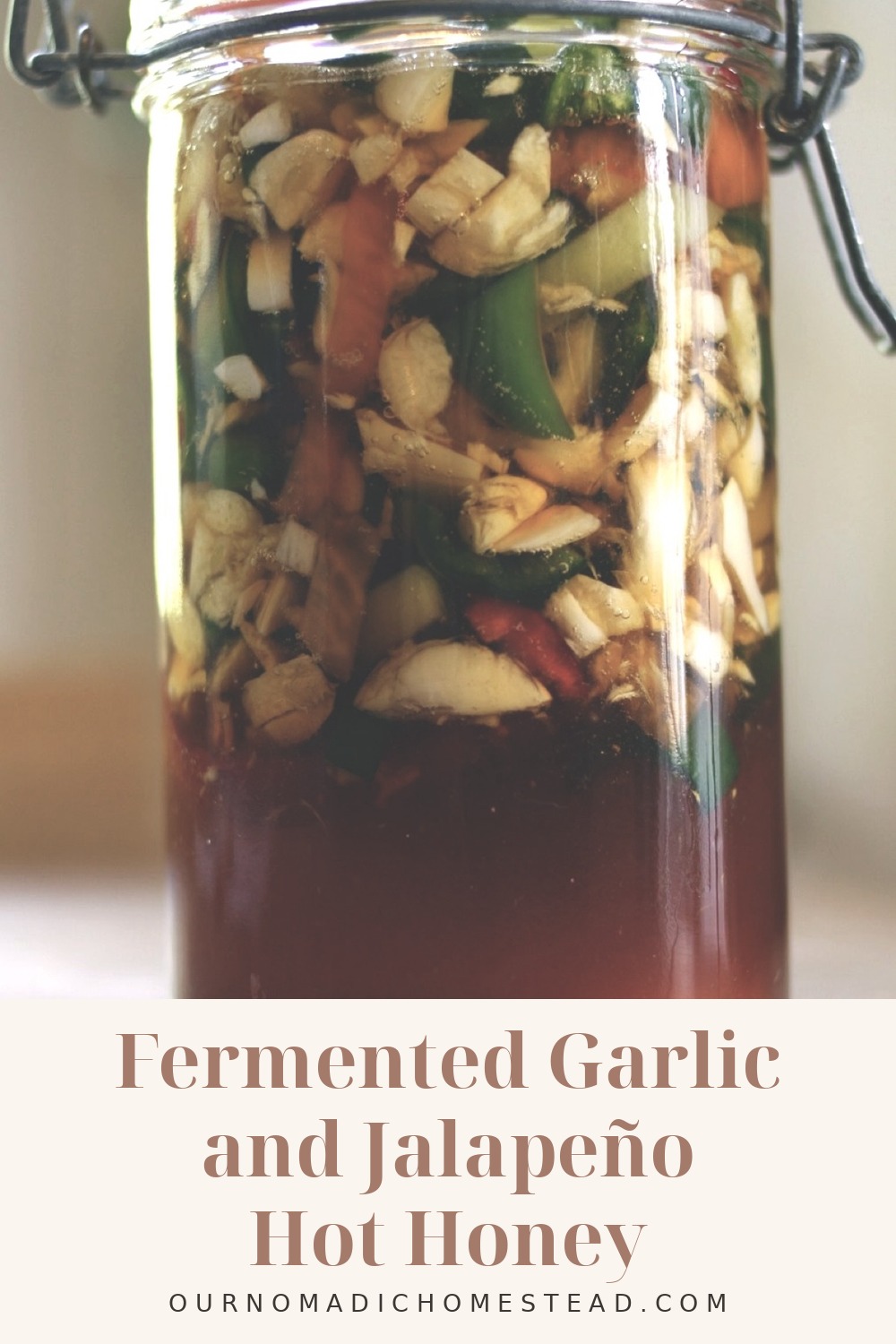
God bless generous neighbors whose garden produces more peppers than they can eat! When they show up at our house, we might eat a few fresh, but the majority will be going in some kind of ferment. This week, they were used for fermented garlic-pepper honey. I chopped the peppers up with garlic, covered them in raw honey, and let it all meld together for a few weeks.
What comes out the other side is one of the most useful jars in my cupboard: a sweet, runny hot honey with a real garlic backbone. In just a week or two, it becomes a tasty medicine you can reach for all throughout cold and flu season. This is the base recipe I follow — but it’s just the springboard for your creativity. There is endless room for variation depending on what peppers you have and how hot you like it.
What Is a Honey Ferment?
It is letting the natural yeasts that live in raw honey go to work. Unpasteurized honey carries wild yeast and beneficial bacteria, but honey by itself is too dry for them to do much. Fresh peppers and garlic bring the moisture. Once the moisture content of the honey rises a little, the fermentation process wakes up — the yeasts produce carbon dioxide, which is why a young honey ferment bubbles. Small amounts of lactic acid and acetic acid come alive and give fermented honey its slight tang underneath the sweet.
As the fermenting process goes on, two things happen that surprise people. First, the honey gets very runny — the vegetables give up their juices and the thick honey thins into a pourable syrup. Second, the raw garlic mellows. Fresh garlic cloves have a sharp taste; after a week or two under honey they turn almost sweet, and the peppers hand their heat over to the whole jar.
Garlic honey has a long history in our home as a delicious home remedy — the jar my kids (even when they were little!) reach for during flu season, when sore throats start making the rounds. This version simply brings the heat along.
The Recipe
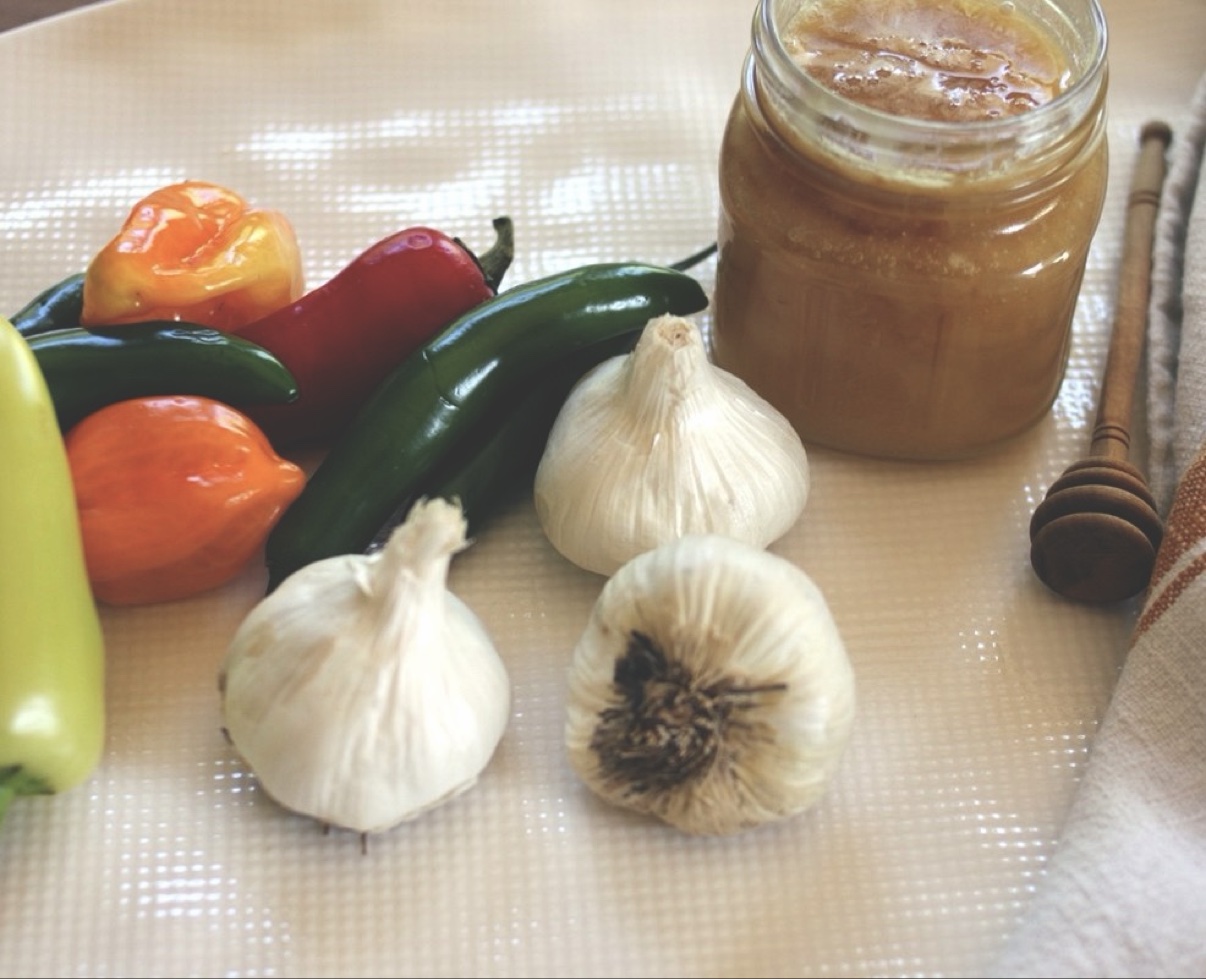
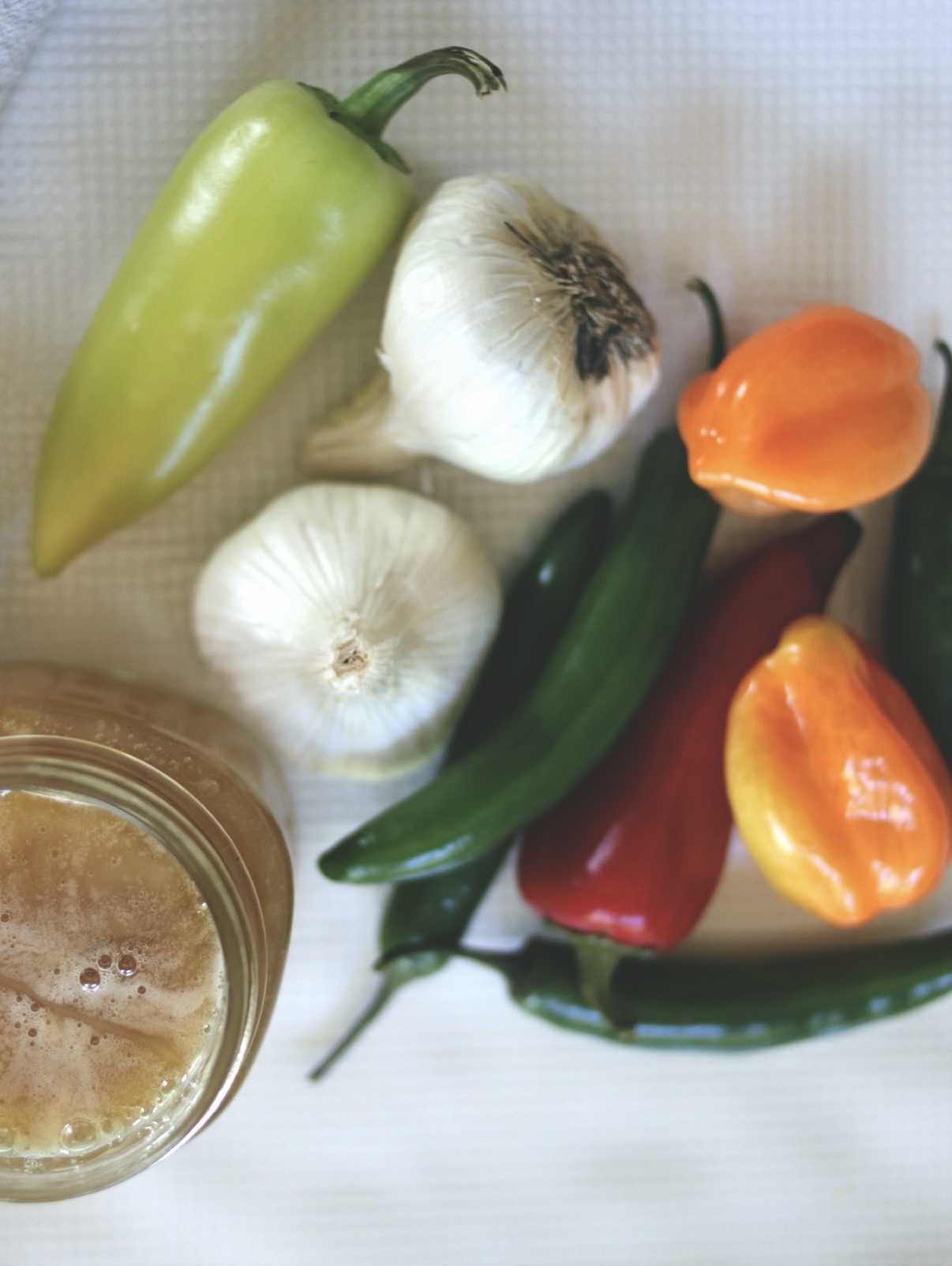
Three simple ingredients:
- 5 habaneros
- 1 serrano
- 1 jalapeño, seeds and all
- 1 head of garlic
- Raw honey, enough to cover
Slice the peppers thin. Peel the garlic and smash it, then give them a rough chop— what matters is surface area, so the honey can get in and the juices can get out.
The habaneros are where most of the heat lives; the serrano and jalapeño fill in the flavor. Make it how you like it: the less honey you use — just barely covering the vegetables — the more spicy the finished honey. More honey dilutes the heat and makes it milder. So the same recipe can be a gentle warm honey or a genuinely hot one, depending on how generous you are with the pour.
How to Make It
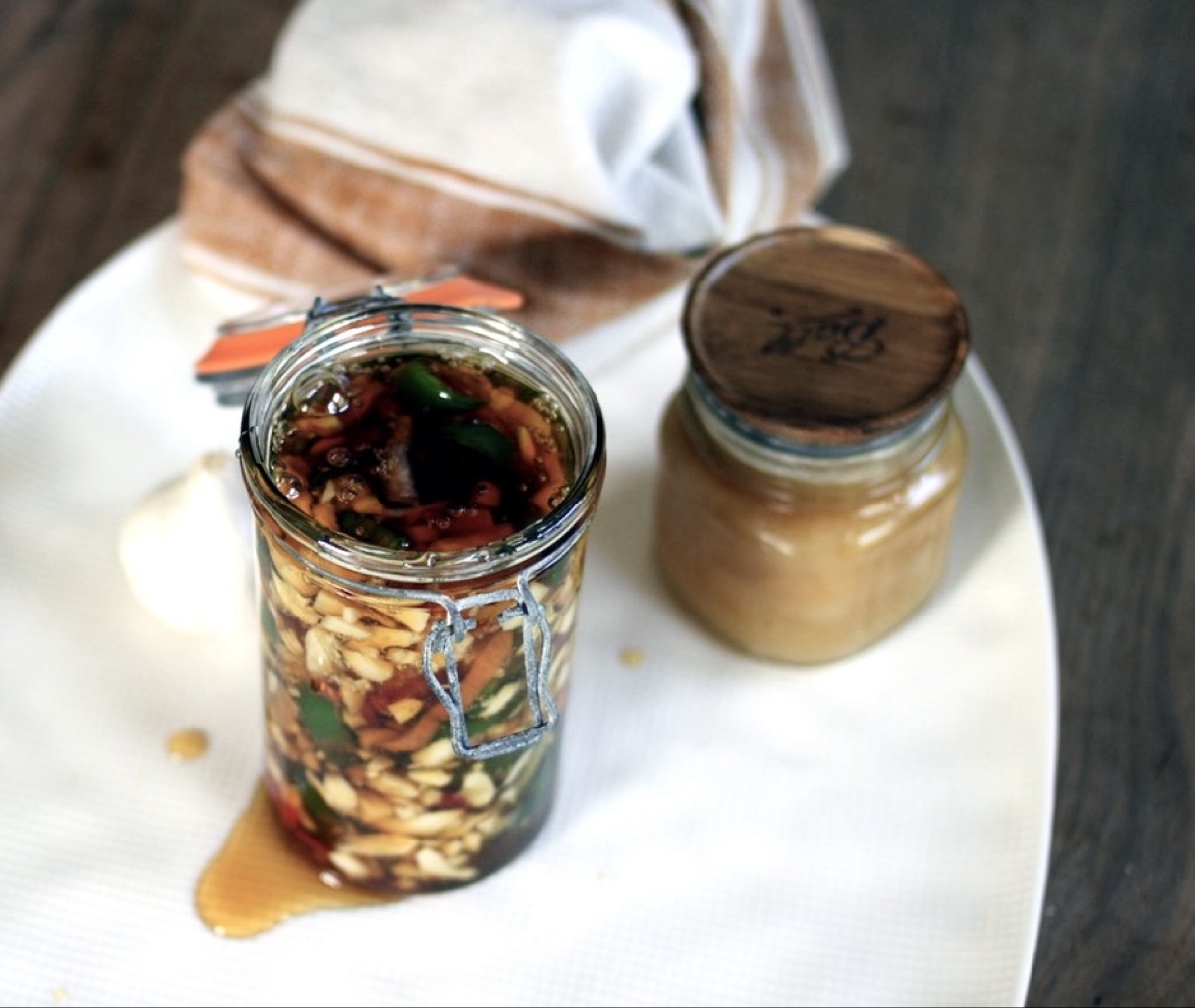
- Start with a clean jar. Wash a glass jar in hot, soapy water and let it dry. I use a fliptop jar, the kind with the clamp lid.
- Add everything to the jar. Peppers sliced thin, garlic chopped, all of it in.
- Cover with honey. Pour the raw honey over until everything is covered, then give it a stir with a clean spoon (or chopstick!) to work the honey down and release the air pockets. Top it off if anything is poking out. Everything under the honey is protected. Stir daily if the vegetables are right at the surface, and it will still turn out just fine.
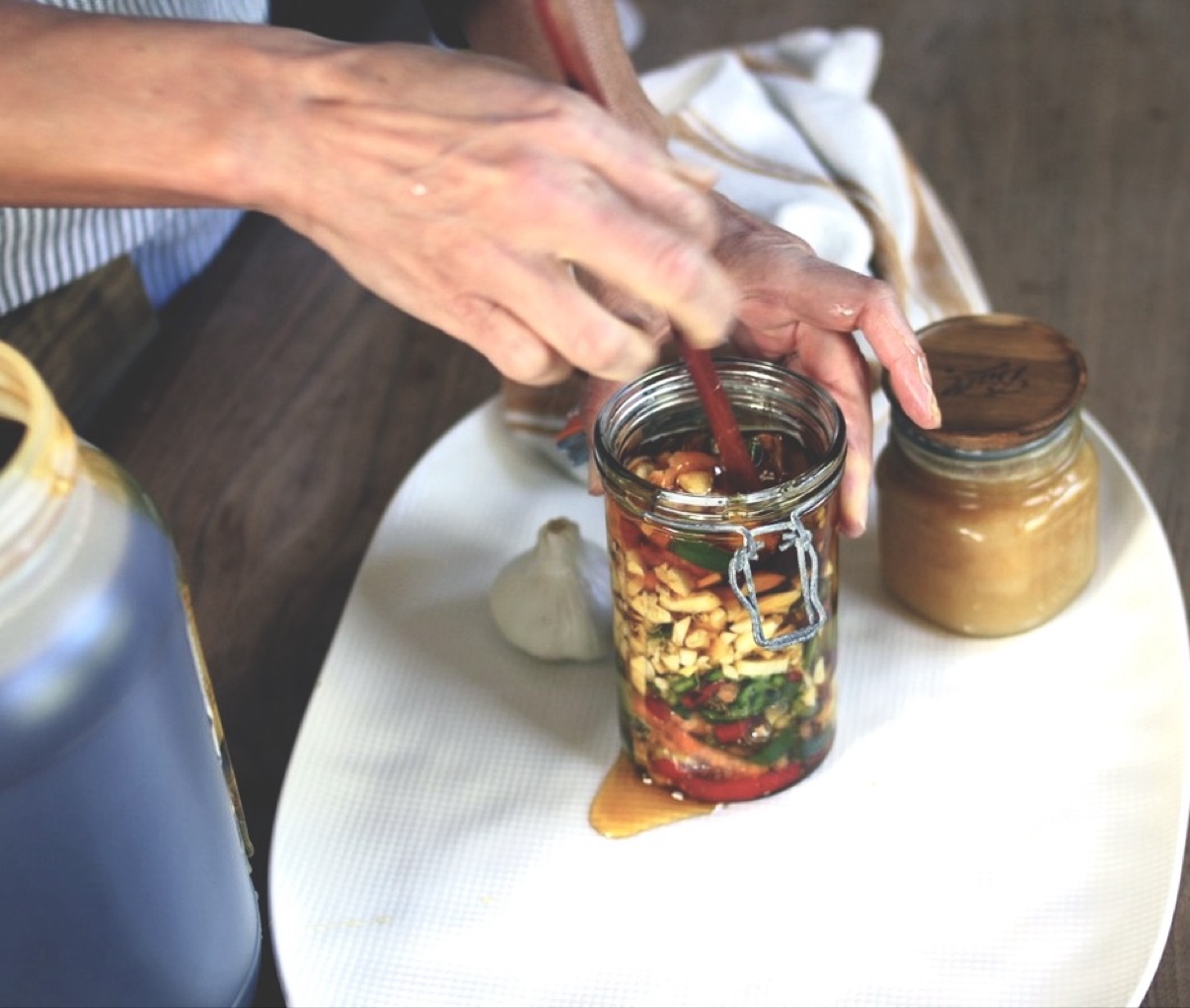
- Cover the jar so it can breathe. A ferment makes gas, and that gas needs somewhere to go — but fruit flies and gnats need to stay out. Cover the jar with cheesecloth or a coffee filter, or do what I do: use the fliptop jar with the gasket removed, so the lid sits loose enough to let gas escape and tight enough to keep gnats out.
- Set it in a dark cupboard for 1 to 2 weeks. Room temperature, dark place — an ordinary kitchen cupboard is perfect. You will see it bubbling within a few days. Wait for the bubbling to stop; then it’s ready to use. As the vegetables break down, the honey will go from thick to very runny. That’s not a problem — that’s the ferment doing its job, and honestly the runny honey is easier to drizzle anyway.
Variations:
The recipe takes variations kindly. A cinnamon stick in the jar is lovely heading into winter. Saffron makes a golden, almost floral version. Swap the peppers for whatever the garden gave you — a batch made from gifted peppers is how this recipe started in the first place. Just keep the honey raw and the garlic in, and let the bubbling tell you when it’s done.
Is It Safe?
Any time honey and garlic come up, somebody asks about botulism, so plainly: botulism spores (from Clostridium botulinum) occur naturally in honey and soil, which is why honey — fermented or not — is never given to a baby under a year of age. For everyone older, a honey ferment is considered low-risk: honey’s low moisture and natural acidity are hostile to botulism, and fermentation adds acid on top of that. Keep the basics in place — clean jar, clean spoon, vegetables kept under the honey — and if you ever want proof, a pH test strip will show you the number; at or below pH 4.6 is the comfort zone. If a jar ever grows mold or smells truly off, compost it and start again. Honey is also a natural food preservative, which is why a finished jar keeps basically forever, especially if you store it in the fridge.
How We Use It
Medicinally, this is a flu-season jar — the one we reach for to support the immune system. When somebody here is starting to come down with something, the dose is 1 tablespoon, 3 times a day. Sometimes it goes into ginger lemon tea. Sometimes it gets added to vinegar to make a “fire cider” shrub. Mostly it gets taken straight, on its own — and when I gave it to my little kids, I always chased it with applesauce or yogurt to take the edge off.
In the kitchen, it’s a hot honey like any other — only better, because you made it. Brush it on the crust of a pizza before you bake it. Mix it into salad dressings wherever they call for honey. Drizzle it over fried chicken. Once the jar is open, you’ll find your own uses; a spoonful has a way of wandering into tea, onto biscuits, over cheese.
FAQs
Do I have to use raw honey?
Yes — this important to the process. Pasteurized honey has had its natural yeasts killed off and the ferment will be stunted and not nearly as helpful to your immune system. Look for raw, unpasteurized honey, ideally local honey from a beekeeper near you (for allergy help). I get mine by the gallon from Azure because we use so much..
My honey got runny. Did I ruin it?
No — that’s your proof that it worked! The vegetables release their juice, the moisture content rises, and thick honey becomes a thin syrup. It gets very runny once it’s done.
How spicy is it, really?
That depends on the honey. Just covering the vegetables gives you the hottest version; a generous pour of honey gives you a milder one. Five habaneros is not nothing, either way — this is a hot honey, and you can drop to two or three if you want the garlic to lead instead.
How long does it keep?
Honey preserves itself. Kept in a cool place in the cupboard, a finished jar of honey keeps for months — long past the point where most jars get eaten.
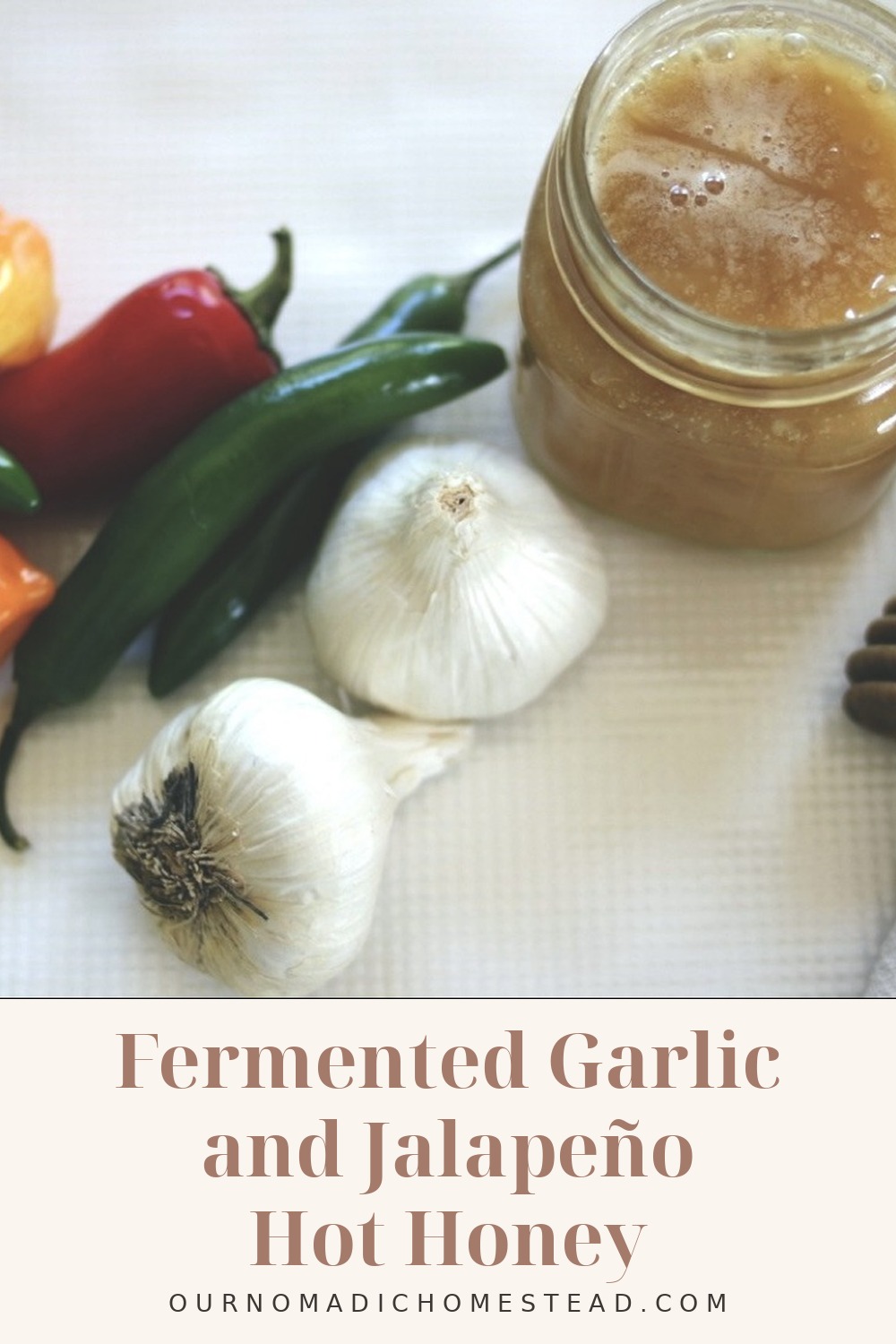
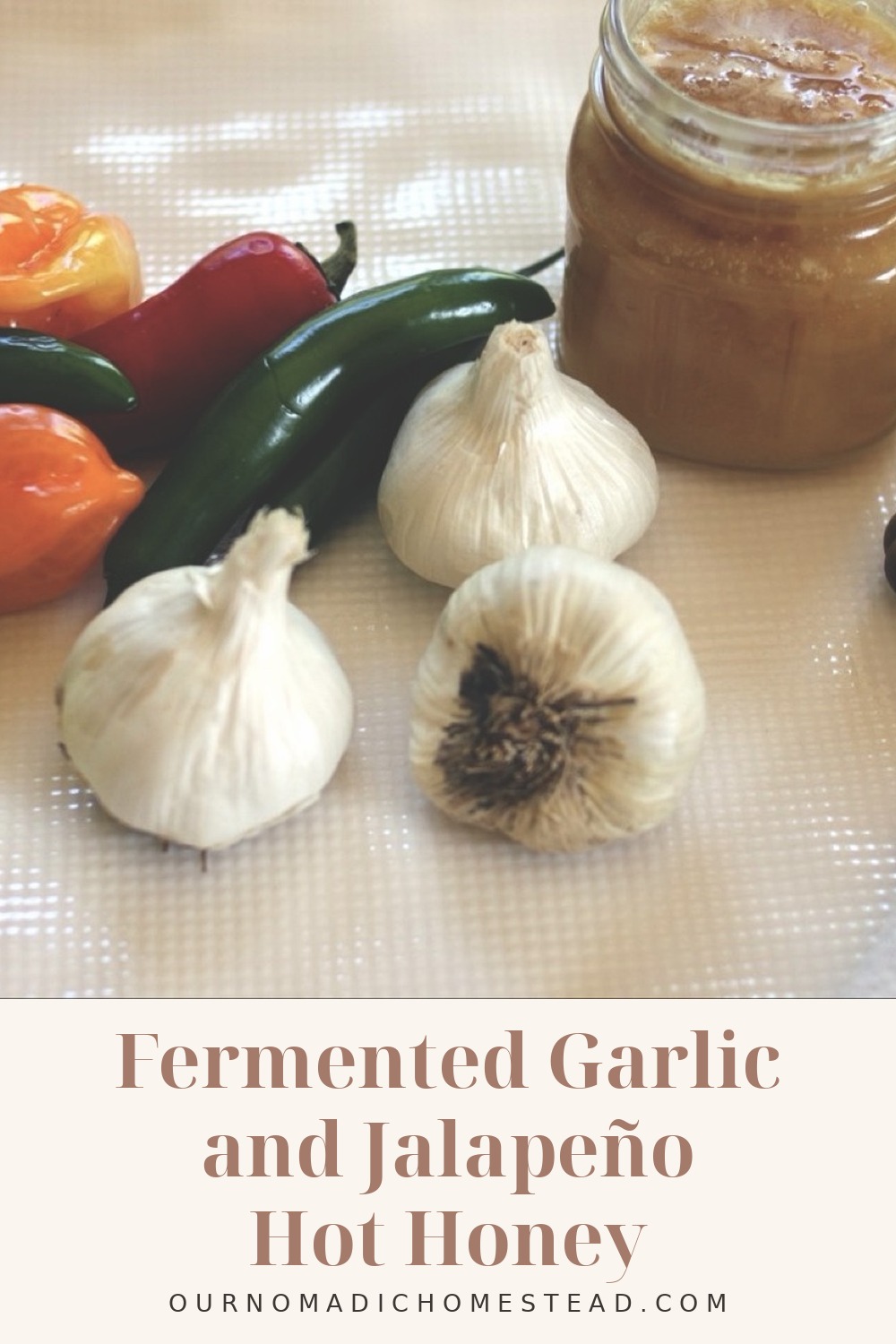
Fermented Garlic and Jalapeño Hot Honey
Ingredients
- 5 habaneros, sliced thin
- 1 serrano, sliced thin
- 1 jalapeño, sliced thin, seeds in
- 1 head of garlic, peeled and chopped
- Raw honey, to cover
Instructions
- Add sliced peppers and chopped garlic to a clean jar.
- Cover completely with raw honey; stir to release air pockets and top off.
- Cover with cheesecloth or a coffee filter, or a fliptop lid without its gasket.
- Set in a dark cupboard at room temperature for 1 to 2 weeks, until the bubbling stops.
- It's ready when the honey has turned runny.
Notes
Less honey = more spicy; more honey = milder. Stir into salad dressings wherever honey is called for; brush on pizza crust before baking; drizzle over fried chicken. Never for babies under a year old. Variations: a cinnamon stick, or a pinch of saffron.
Leave a Reply