
If you have never had a kraut bierock, you need to know that the combination of sweet bread, cabbage, onion and beef is akin to the perfection of peanut butter and jelly. Lime and cilantro. Pancakes with milk. They were made for each other! These little hand pies — seasoned ground beef and cabbage tucked inside soft bread dough — are shockingly delicious. I have yet to serve them to someone who wasn’t a) suspicious, then b) pleasantly surprised!
My original kraut bierocks recipe has been on this blog for a while now, made with a sweet yeast dough. But for the last several years, I have used sourdough for just about everything that comes out of my oven, and these are no exception. This is the sourdough version: same beloved filling, same ancient recipe, this time wrapped in a naturally leavened dough that gives the whole thing an upgraded level of nutrition, and a chew that stands up beautifully to the savory filling.
Whether you come from a long line of cabbage bread addicts, or this is the first time you’ve ever heard the word “bierock,” I think your family is going to love them.

The Cabbage Bread I Grew Up With
My grandma and her siblings were the children of German immigrants, and long before ancestry websites were a thing, the Starck siblings were tracing our family line by hand and collecting their childhood recipes into a little book for us grandkids. I treasure that cookbook, though I don’t cook from it as often as I should! (If only rhubarb would grow here, I could make her Rhubarb Meringue Pie!) Because cabbage bread was such a family favorite, she taught me how to make it long before I could follow a recipe out of a cookbook!

My family spelled it “Kraut Bieroch,” with a ch, though it keeps auto-correcting to “Bierock,” so I’ve given up and gone with the common spelling. I actually didn’t know they were called bierocks until I got her recipe book. She just always called it “Cabbage Bread.” When my grandma immigrated here, her family was adamant about assimilating to the American culture. As much as I admire them for that, I am sad that we have lost a lot of what their culture was.
My grandma made lunch for my dad and his brothers every single weekday, well into her late eighties. One of my favorite parts of summer break was getting to join the uncles at her house for “dinner” (lunch— and what I thought was dinner was “supper”) and several times a year she made her famous cabbage bread for “dinner”. Once I was old enough — and despite my complete lack of interest in the kitchen under every other circumstance — I asked her to teach me how to make what I considered to be the best food on earth.

Because she and her siblings were so intentional about sharing their heritage with us, our cabbage bread lessons were of course filled with her memories of life as a little immigrant girl, and all the stops they made before they landed in Colorado.

So What Exactly Is a Bierock?
A bierock is a pocket sandwich. Classic German food, really: a savory filling of ground beef, cabbage, and onion seasoned simply with salt and pepper, sealed inside a square or round of soft bread dough and baked until golden brown. Think of it as the original hot pocket, except homemade, hearty, and actually good.
Bierocks came to the United States with the Volga Germans — ethnic Germans who settled in the Volga region of Russia, along the Volga River. Many of them immigrated to the American plains in the late 1800s. They carried this recipe with them, and it took root in the Great Plains of America. If you’re from Nebraska, you may know the close cousin called a runza. Same idea, same roots, slightly different shape and name. Similar filled breads show up all over Eastern Europe— the Cornish pasty over in England, pirozhki in Russia — because wrapping a humble filling in dough is just a good idea wherever people are frugal and hungry!
The filling itself is a loose meat mixture: it’s not a patty and it’s not bound with anything. It’s crumbly, savory, peppery ground beef and sweet wilted cabbage and onion, and the bread soaks up just enough of the juices to make the whole thing come together.
Why Sourdough?
So many reasons! The mild tang of sourdough plays so well against the sweet cabbage and rich beef. It adds a depth you don’t get from a yeast dough. The delicious texture— sourdough has a sturdier, more satisfying chew. Also, nutrition. Flour that has been able to soak and then ferment is so much better on the gut—its like it’s already a little pre-digested, so much easier on your system. But my main reason is because sourdough is just how I bake. I keep a starter in my fridge, and I have used sourdough exclusively for the last decade. So when bierock day comes, sourdough is what I reach for. These hold up well to being picked up and eaten by hand, (which is exactly how they should be eaten).
I do occasionally miss the sweetness of the yeast dough my grandma’s generation made these with. If your family leans sweet, this recipe is a perfect replacement.
Not a sourdough baker? Don’t let that stop you — my original kraut bierocks post walks through this same recipe with a yeast dough. If you’re really not a baker, frozen dinner rolls dough works!
The Sourdough Dough: Timing Is Everything
The one real difference between the yeast version and this one is the clock. Sourdough works on its own schedule, so plan your day around the dough a little. That is true of sourdough dough recipes in general, and this one is no exception.
Feed your starter the night before so it’s active and bubbly when you mix. I feed mine with the dregs of starter from an unwashed sourdough jar. There’s usually 25-50 grams in there. I feed it with 100g water and 100g flour.
Mix your dough in the morning for an evening bake. Combine your active starter with warm water, flour (I use whole wheat) and salt. Do a series of four stretch and folds every 30-45 minutes. Cover and let it bulk rise until it has nearly doubled and doesn’t stick to your finger when you poke it. In a warm kitchen, with 100% fresh-milled flour, that can be as soon as 3-4 hours from the time your dough came together. With a mix of white flour, it could be four to six hours. In a cool house, it will take longer.
Watch the dough, not the time. When the dough doesn’t stick to your finger when you poke it, and it pulls away without grabbing the side of the bowl, you’ll know it’s ready. (Be careful, because if you miss that window, over-proofed dough will stick to your finger and grab the bowl, too!)

You want the bulk rise essentially finished by the time your filling is made. Your day will flow like this: dough mixed in the morning, filling made while the dough finishes bulk rise, then shape, fill, and bake. Once you’ve done it once, the rhythm is easy.
1,000g flour
700g water
20g salt
200g starter
The Filling: Simple on Purpose
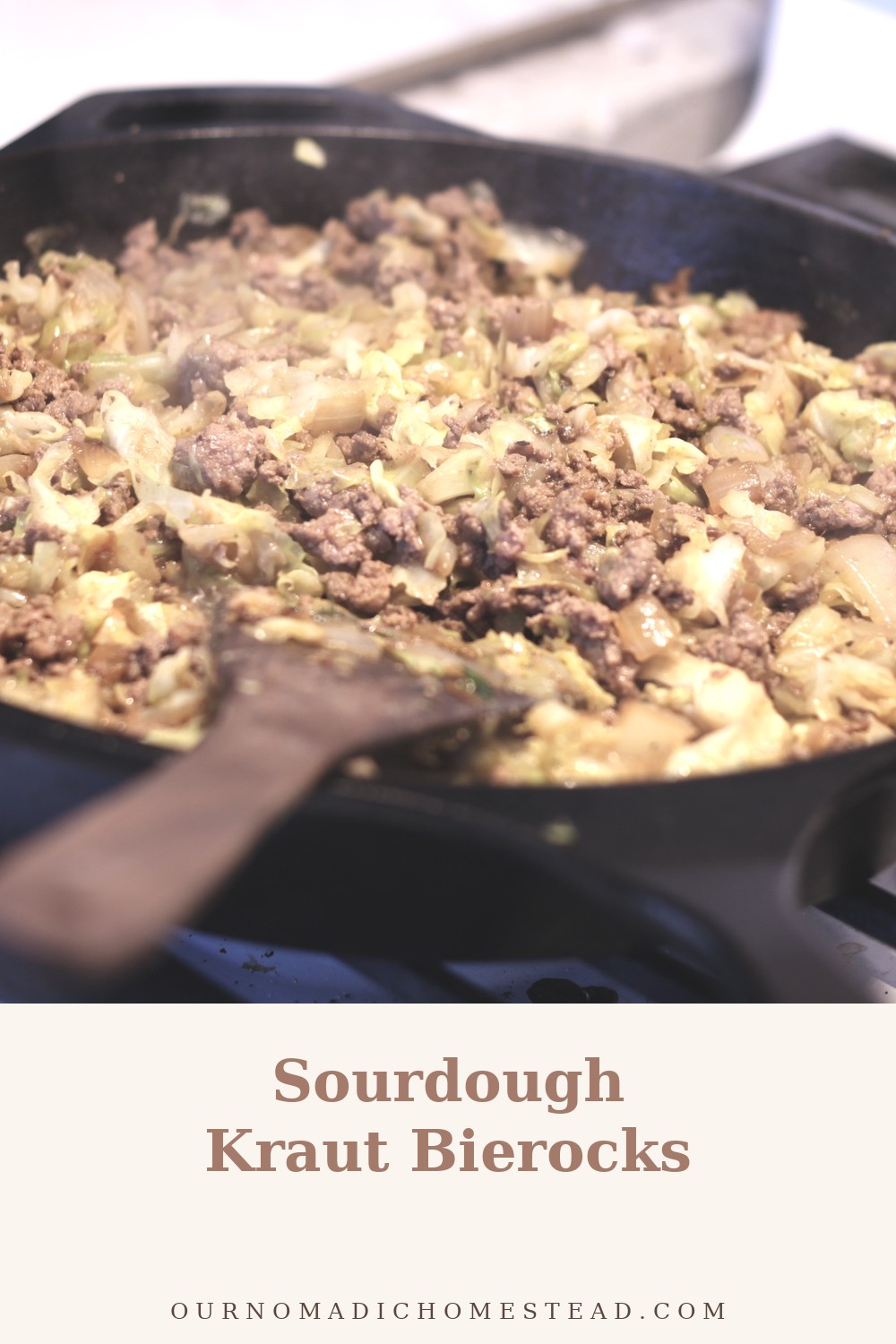
While the dough finishes rising, make the filling in your biggest skillet. Dice one large onion (or two smaller ones) and sauté it over medium heat. Add 2 pounds of ground beef and chunk it up well as it browns. Finely chop 6 cloves of garlic and stir those in. While the meat browns, coarsely chop a whole large head of green cabbage (purple can work, I just prefer the flavor of green), then add it to the skillet. Season with a teaspoon or so of salt and a hefty pinch of black pepper. (You can even chop up the core—it softens up and you’ll never notice it!)

Cook until the cabbage is wilted and the beef is browned through, then turn off the heat and keep the filling warm. That’s it. No fancy spice blend, no secret ingredient. The cabbage gets sweet, the beef gets savory and peppery, and the bread is going to soak up the juices. Resist the urge to dress it up; generations of Volga German grandmas cannot be wrong.

If your filling is swimming in liquid, drain off the excess before you fill the bierocks. A wet filling is the number one cause of soggy bottoms and burst seams, and we are not doing all this work for soggy bottoms.
Shaping: The Two Tricks That Matter
Divide your risen dough into 16 pieces — each one becomes its own little bread roll around the filling. However big a piece you use, roll it out on a lightly floured surface, and here is a trick Charlie developed: roll the center less and the edges more. You want the middle of your dough round to stay thicker and only the outer edges rolled thin. The thick center supports the filling without tearing, and the top of your bierock bakes up just as fluffy as the bottom. (In the photos on my original post, my girls were rolling and stuffing while I took pictures, and I forgot to tell them this trick.)

Grandma made hers huge — I never pull out a big enough chunk of dough to make them like she did — but any size works as long as the proportion of dough to filling is right.
Trick number two is the key to successful cabbage bread: do not overstuff it. Spoon a generous pile of filling into the center of each round, then pinch the dough up and around it, sealing it well. You want a nice tight seal with no liquid dripping out. Place each little pocket seam side down on a parchment-lined baking sheet. Sixteen sealed pockets, lined up and ready to bake, is a beautiful sight for a hungry family!
Bake, Butter, and the Snyder Way
Bake at 350 degrees for about 30 minutes, until the bierocks are a deep golden brown. The smell at this point will bring people to the kitchen whether you called them or not.

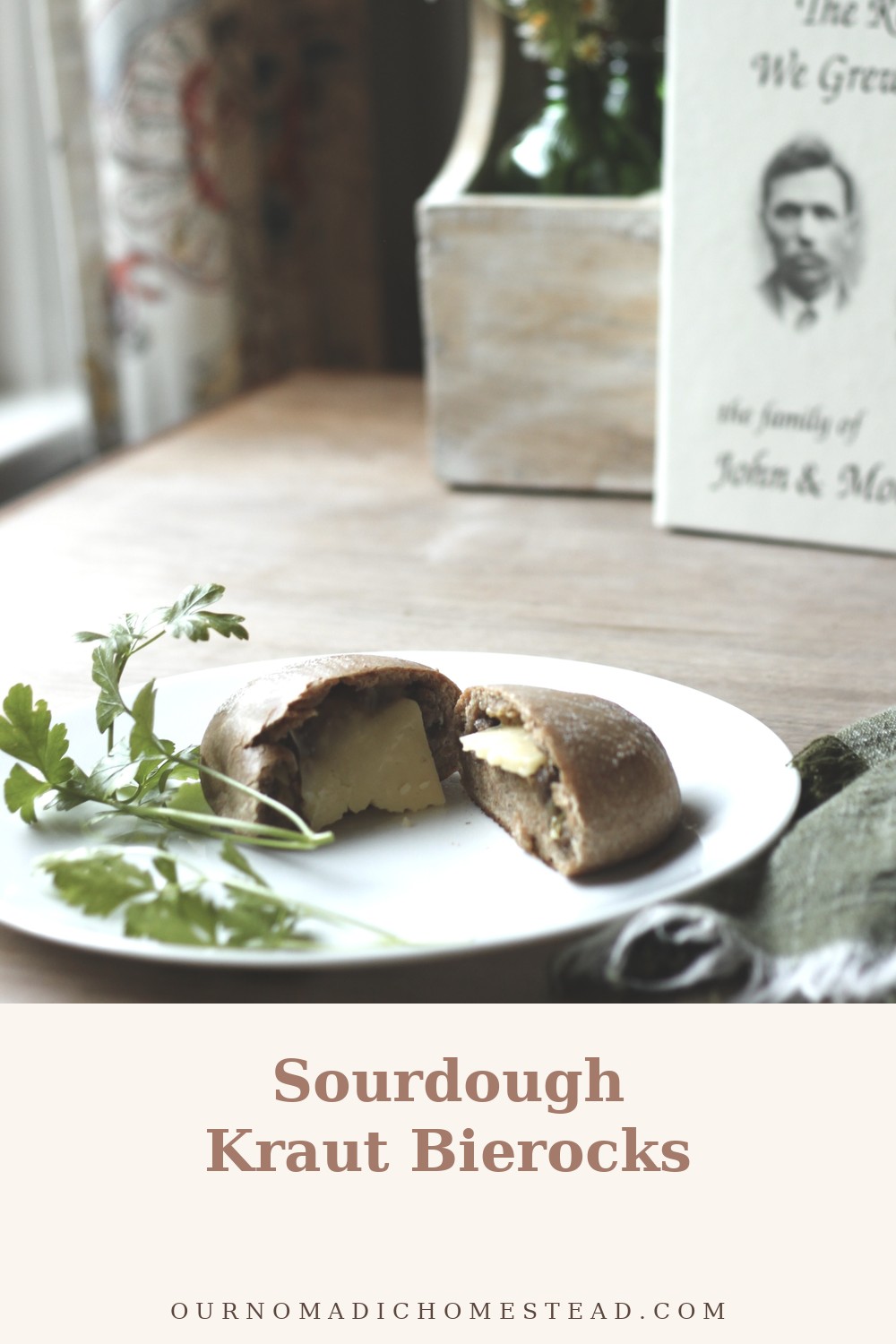
The second they come out of the oven, brush them with melted butter — or be lazy like me and rub a stick of butter right over the hot tops. Then serve them the way my dad and uncles always did: slice the bierock in half while it’s still piping hot and wedge a slice of cheddar or Swiss cheese inside. By the time it’s cool enough to eat, the cheese is melted into the filling and it is for sure the best way to eat them!

Tips, Make-Ahead, and Freezing
Filling ahead: The filling keeps well in the fridge for a day, which splits the work nicely around sourdough timing. Just warm it slightly before filling so it doesn’t chill your dough.
Freezing: Bierocks freeze beautifully, baked or unbaked. Freeze baked ones solid on a sheet pan, then bag them; reheat from frozen in a 350-degree oven until hot through. These are gold to have in the freezer for busy weeks, and a special treat to pull out when you did not plan dinner.
Serving: Grandma always had a simple salad next to hers — hers had radishes and carrots — to balance the richness. A dollop of sour cream on the side is a common and delicious addition, and a pot of soup turns a few bierocks into a full farm lunch.
Cheese inside: You can seal a slice of cheese right inside with the filling before baking. My family wedges it in after, but your kitchen, your rules.
Sourdough Kraut Bierocks FAQs
What’s the difference between a bierock and a runza?
Very little. Both are Volga German pocket sandwiches of beef, cabbage, and onion in bread dough. Runza is the Nebraska name (and a restaurant chain there); bierock is what Kansas and my family call them. Runzas are often shaped more rectangular; bierocks tend to be round.
Can I make these with yeast dough or store-bought dough instead?
Absolutely — that’s how my original kraut bierocks recipe is written, and frozen dinner roll dough, thawed and rolled out, is the shortcut my own grandma offered. This post is simply the sourdough version for those of us who keep a starter.
Why did my bierocks burst or leak?
Almost always one of two things: too much filling, or filling that was too wet. Drain the skillet well, don’t overfill, and pinch the seam firmly.
Can I use whole wheat flour in the sourdough dough?
Yes — I replace the all-purpose flour with whole wheat in my go-to sourdough dough and it works beautifully here. The crumb is a little heartier, which suits the filling.
How long do leftovers keep?
About 3–4 days in the fridge, if they survive the first day. Reheat in the oven, not the microwave, to keep the bread from going tough.
I hope you’ll give these a try, especially if cabbage bread is part of your family’s story too. Come back and tell me how they turned out — and if your grandma made something like these, I want to hear what she called them.


Sourdough Kraut Bierocks with Ground Beef and Cabbage
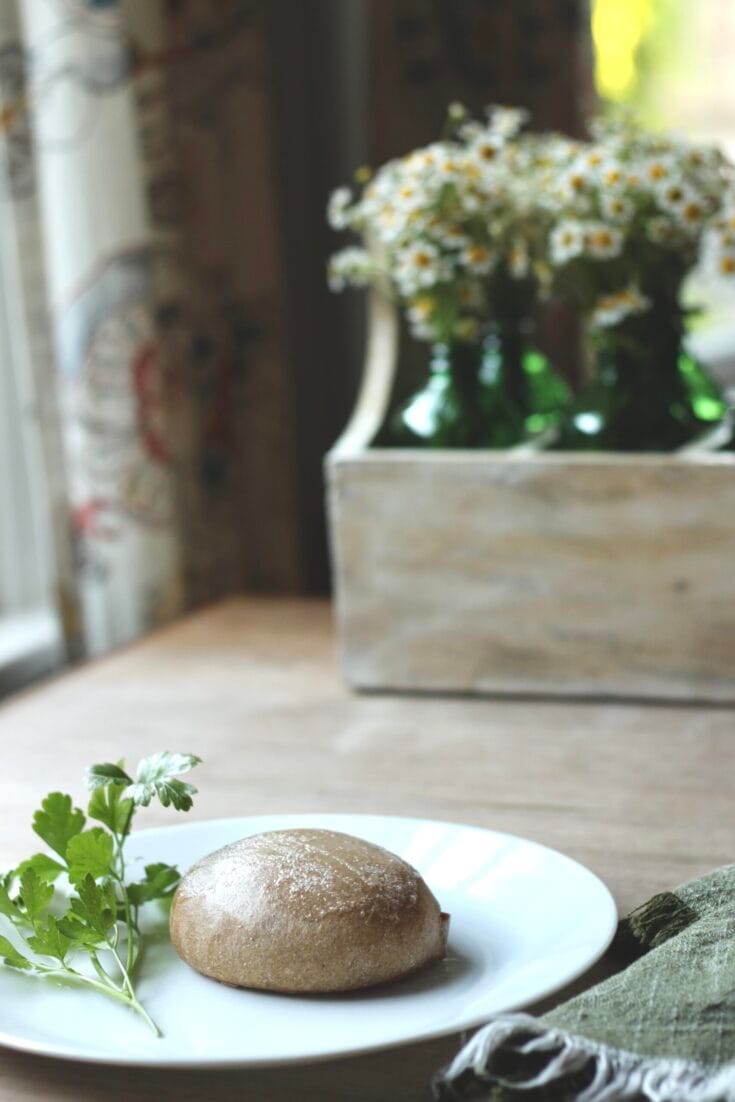
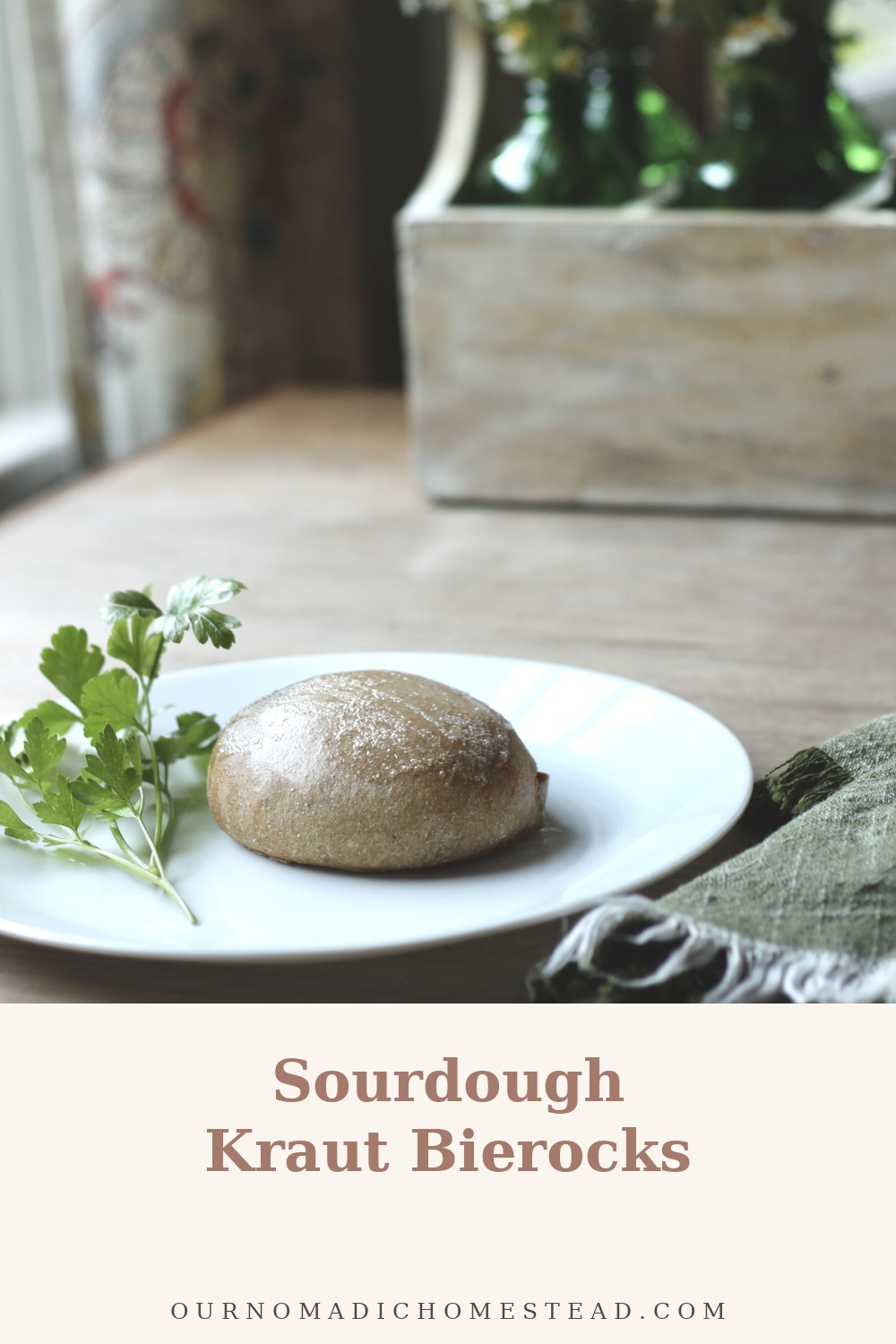
Seasoned ground beef, sweet cabbage, and onion sealed inside soft sourdough dough and baked golden — the Volga German hand pie my Grandma Snyder made famous in our family.
Ingredients
- 1 batch sourdough dough, bulk rise nearly complete
- 1 large or 2 small onions, diced
- 2 pounds ground beef
- 6 cloves garlic, finely chopped
- 1 large head green cabbage, finely chopped
- 1 tsp salt
- ½ tsp pepper
- Butter, for brushing the tops
- Optional: cheddar or Swiss cheese slices, for serving
Instructions
- Feed your starter ahead so it is active and bubbly; mix your sourdough dough in the morning and let it bulk rise until nearly doubled.
When the dough is nearly ready, make the filling: sauté the onion in a large skillet, add the ground beef and brown it, then stir in the garlic, cabbage, salt, and pepper. Cook until the cabbage is wilted. Drain any excess liquid and keep warm.
Preheat oven to 350°F. Line baking sheets with parchment.
Divide the dough into 16 pieces. Roll each into a round, keeping the center thicker and the edges thinner.
Spoon filling into the center of each round — do not overfill. Pinch the dough up and around the filling to seal.
Place seam side down on the prepared sheets.
Bake about 30 minutes, until deep golden brown.
Brush or rub with butter while hot. Optional: slice in half and wedge in a slice of cheese, Snyder style.
Notes
Filling can be made a day ahead and refrigerated.
Freeze baked bierocks and reheat from frozen at 350°F until hot through.
Bosch True Convection: bake at 325°F (for the 350°F conventional bake).
Yeast dough or thawed frozen roll dough can replace the sourdough; see the original kraut bierocks post on this blog.
Leave a Reply